




Technical Principles Of PCB For New Energy Vehicles
Jul 10, 2026
Leave a message
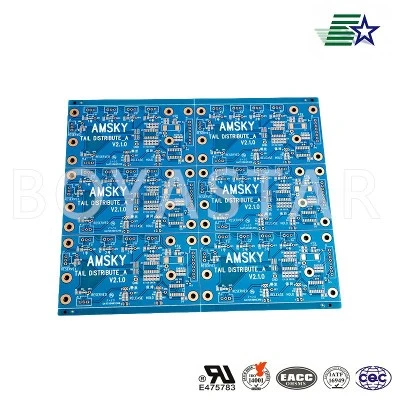
The primary distinction between PCBs for new energy vehicles and conventional civilian circuit boards lies in their adaptation to the high-voltage power and safety control systems of the vehicle, serving as the core hardware carrier for the three-electric system and onboard electronic control devices. The 400V to 800V high-voltage electricity and low-voltage signal commands of the vehicle rely entirely on PCBs for transmission, distribution, and control. Unlike ordinary circuit boards that merely handle simple circuit conduction, automotive PCBs must also manage power carrying, signal acquisition, and electrical isolation, ensuring stable power output for critical components such as motors, batteries, and electronic controls while accurately transmitting monitoring signals from various sensors. At the hardware level, they support the vehicle's power operation and safety protection, forming the foundation for the normal functioning of the new energy vehicle's electronic control system.
High-voltage insulation and electrical safety design are the most critical technical principles in the PCB of new energy vehicles. Due to the high-voltage working conditions in new energy vehicles, issues such as arcing, leakage, and signal interference are highly prone to occur. Therefore, the PCB design and production strictly adhere to automotive-grade electrical clearance and creepage distance standards. By optimizing circuit layout, increasing the spacing of high-voltage lines, and utilizing high-insulation substrates, potential risks of high-voltage breakdown and circuit short circuits are effectively eliminated. Additionally, for core modules such as the BMS battery management system and MCU motor controller, a layered isolation wiring approach is employed, separating high-voltage power lines from low-voltage signal lines. This prevents strong electrical interference with weak signals, ensuring accurate transmission of core commands like battery state monitoring, motor torque regulation, and charging control, thereby avoiding operational failures in the vehicle.
High-current load-carrying and efficient heat dissipation technologies are critical supports for the power conditioning of PCBs in new energy vehicles. During acceleration and regenerative braking, the circuit instantaneously carries hundreds of amperes of current, making ordinary thin-copper PCBs prone to overheating, excessive voltage drop, and even burnout. The industry widely adopts processes such as thick copper foil and reinforced circuit layers to increase the cross-sectional area of the wiring, reduce circuit resistance, and enhance current-carrying capacity. Additionally, integrated with the vehicle's thermal management requirements, cooling vias and metal base structures are designed in power-concentrated zones to rapidly dissipate the substantial heat generated by MOSFET and IGBT power devices. This ensures compatibility with the vehicle's wide operating temperature range of -40°C to 125°C, preventing issues like board aging, solder joint cracking, and performance degradation caused by high temperatures, while maintaining circuit stability under extreme high and low-temperature conditions.
High-reliability integration and anti-interference design, suitable for the complex onboard operating environment of new energy vehicles. During vehicle operation, continuous exposure to vibration, jolting, electromagnetic interference, and other harsh conditions necessitates enhanced mechanical stability. New energy PCBs achieve this through reinforced substrate materials and strengthened component soldering processes, preventing issues like wire detachment and cold solder joints caused by prolonged vibration. With the advancement of automotive intelligence, the increasing presence of onboard radar, autonomous driving systems, and smart cockpits demands higher circuit functionality within limited vehicle space. PCBs enable high-density interconnects and multi-layer stacking to integrate more circuit functions, streamlining the vehicle's electronic architecture. Simultaneously, optimized designs such as impedance matching and shielded wiring reduce onboard electromagnetic interference, ensuring stable transmission of intelligent driving perception signals and vehicle communication signals. This facilitates coordinated operation between power control and intelligent systems.
Send Inquiry