




Tips For Using Equipment Power PCB Board
Jul 13, 2026
Leave a message
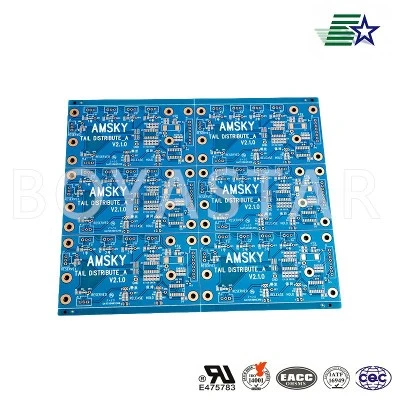
Reasonable selection and load matching are prerequisites for the stable operation of equipment power PCB, which can avoid most circuit failures from the source. In practical use, it is necessary to match the power PCB with the corresponding copper thickness, line width, and board specifications according to the rated power, operating current, and voltage conditions of the equipment to avoid overloading of small-sized circuit boards. Low power weak current equipment does not require the use of thick copper foil sheets, which can save costs; Industrial equipment that operates at full load for a long time must be equipped with specialized power boards made of thick copper and with high current carrying capacity to prevent circuit overload and heating. At the same time, it is necessary to distinguish the functional characteristics of different power boards such as voltage regulation, switching, and isolation. For precision equipment, isolation type power PCBs are preferred, while ordinary industrial control equipment is adapted to conventional switching power boards to achieve precise matching between scenarios and board types, maximizing the power supply performance of the circuit board.
Standardizing installation layout and heat dissipation protection is the core practical skill for extending the service life of equipment power PCB. During the assembly process, it is necessary to strictly follow the positioning holes on the board surface for fixed installation, ensuring that the board is flat and fits the installation base, avoiding situations such as suspension, skewness, and unilateral force, and avoiding welding point detachment and circuit breakage caused by equipment vibration during operation. In terms of layout, try to avoid enclosed dead corners and heating core areas inside the equipment, reserve sufficient ventilation and heat dissipation space, and high-power power PCB can be equipped with heat sinks and thermal pads to assist in heat dissipation. At the same time, separate the strong and weak electrical wiring to avoid the intersection and mixing of power lines and signal lines, reduce electromagnetic interference, and keep the board clean to prevent dust and oil accumulation from causing leakage and short circuit problems, ensuring the long-term stable operation of the circuit board.
In daily use, try to avoid frequent start stop and instantaneous full load impact of equipment. Frequent current fluctuations can easily lead to aging of power PCB circuits and damage to power devices. For harsh working conditions such as humidity, dust, and alternating high and low temperatures, the board surface can be treated with moisture-proof and anti-corrosion protection to enhance its environmental adaptability. Regularly carry out routine maintenance, focusing on checking whether the solder joints are virtual, whether the circuits are oxidized, whether the heat dissipation structure is normal, and promptly identify hidden faults. In addition, when the equipment is idle, it needs to be stored with power off to avoid the aging of components caused by the circuit board being live and static for a long time. Through refined use and maintenance, the failure rate of the power board can be significantly reduced, and the cost of equipment operation and maintenance can be reduced.
Send Inquiry