





Key Functions Of The Sensor PCB
Jul 05, 2026
Leave a message
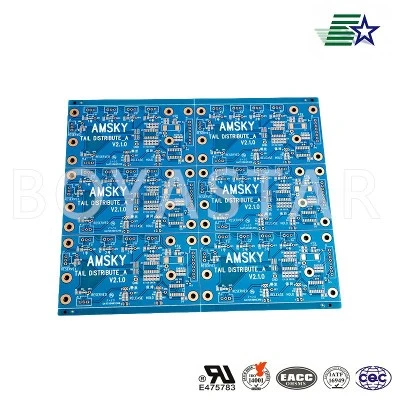
The primary function of a sensor PCB is to provide electrical connections and a stable operating environment for the sensor and its associated electronic components. After detecting external parameters such as temperature, pressure, humidity, or light, the sensor converts the data into electrical signals; the PCB then interconnects the sensor, control chip, power supply, and other components, enabling them to function together seamlessly. Additionally, the PCB allows for the efficient layout of components based on the device's structural requirements, minimizing the device's overall size while ensuring proper circuit operation.
Beyond basic connectivity, the sensor PCB also facilitates signal processing. Signals generated by sensors are susceptible to noise and external interference during transmission; therefore, onboard circuitry-such as amplifiers, filters, and converters-processes these signals to ensure the collected data is stable and accurate. For highly digitized sensor devices, the PCB can also integrate microcontrollers, analog-to-digital converters (ADCs), and communication interfaces to handle data acquisition, computation, and transmission.
Sensor PCBs also provide power supply, protection, and auxiliary heat dissipation functions. Power circuitry delivers a stable operating voltage to the sensor and other components, while protection circuits mitigate the impact of issues such as overvoltage and overcurrent. For high-power sensor devices, the PCB works in conjunction with thermal management structures to dissipate heat generated by components. Through these functions, the PCB ensures the sensor system reliably performs data acquisition, signal processing, and information transmission, thereby enhancing the device's overall reliability and service life.
Send Inquiry