





Maintenance of Sensor PCBs
Aug 08, 2026
Leave a message
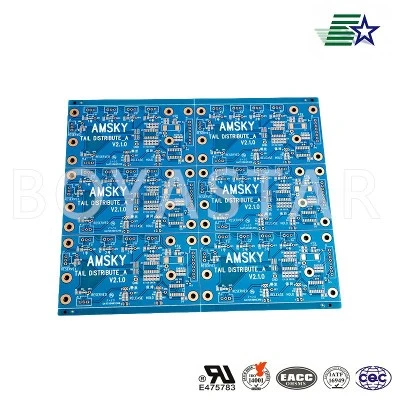
Sensor PCBs are susceptible to factors such as dust, moisture, temperature fluctuations, and mechanical vibration during long-term use; therefore, regular maintenance is essential. First, the PCB surface must be kept clean to prevent the accumulation of dust and debris. This is particularly important in humid environments, where dust and moisture can combine to form conductive paths, leading to current leakage or short circuits. Cleaning methods should be selected based on the specific characteristics of the PCB to avoid damaging components or circuitry through the use of improper tools.
Particular attention should be paid to inspecting components, solder joints, connectors, and circuit traces for any abnormalities. Issues such as loose components, cracked solder joints, corroded traces, or poor connector contact must be addressed promptly. Additionally, the PCB's operating voltage and current should be verified to ensure they remain within normal ranges, thereby preventing sensor instability caused by power supply irregularities. For PCBs installed in high-vibration environments-such as industrial machinery or automotive applications-mounting structures should be inspected regularly to prevent connection components from loosening due to prolonged vibration.
For sensor PCBs operating in demanding environments, measures for moisture protection, dust prevention, and heat dissipation are also required. During extended periods of equipment operation, adequate heat dissipation around the PCB must be ensured to prevent excessive temperatures from compromising the performance of electronic components. If the PCB is exposed to prolonged humidity or high temperatures, appropriate protective measures-such as applying conformal coatings, using sealed enclosures, or implementing heat dissipation structures-should be adopted based on specific conditions. Furthermore, maintenance procedures should include detailed records of faults and test results; tracking performance changes allows for timely repair or replacement, thereby extending the service life of the sensor PCB and ensuring the stable operation of the entire sensor system.
Send Inquiry