




Testing methods for technical PCB boards
Aug 17, 2026
Leave a message
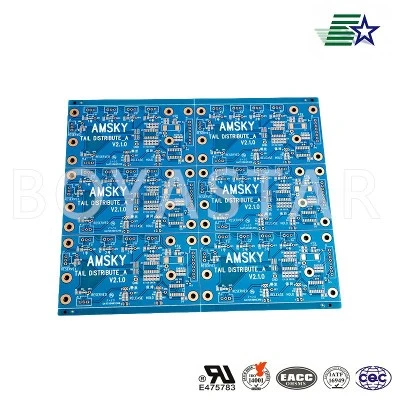
Visual inspection of appearance is the most basic and routine first inspection process for PCB finished products, mainly used to check the basic appearance and structural defects of the board surface. The inspectors use natural light, specialized light sources, and magnifying glasses to conduct a comprehensive inspection of the overall appearance of the circuit board, focusing on checking whether there are scratches, exposed copper, solder mask detachment, surface oxidation and blackening problems on the board surface. At the same time, the integrity of the circuit is checked to eliminate process defects such as broken wires, residual copper, and uneven circuit thickness. In addition, the accuracy of the board's appearance, hole size, and silk screen markings will be verified, and the solder pads will be checked for regularity, offset, and solder blockage to ensure that the PCB board's appearance and structural dimensions fully comply with the production drawing standards, and to eliminate non-conforming boards with poor appearance and structural deviation.
Electrical performance testing is the core means of verifying the reliability of technical PCB circuits, mainly detecting circuit conductivity, insulation, and overall electrical stability. The industry generally uses on/off testers and insulation resistance testers to carry out testing work, comprehensively investigating core electrical faults such as open circuits, short circuits, and leakage of circuits. Through point-to-point disconnection testing, confirm that each circuit is conducting normally and has no potential for open circuits, and that there are no abnormal short circuits between adjacent circuits or solder pads. For technology PCBs used in high-voltage working conditions, voltage withstand tests will also be conducted to verify the resistance of the insulation layer of the board to breakdown, in order to avoid leakage and arc breakdown problems in high-voltage environments. The complete set of electrical testing can accurately identify hidden circuit problems, ensuring stable operation and no electrical faults of the circuit board after power on.
Precision performance and reliability testing are commonly used for high-end technology PCB testing with multi-layer, high-frequency, and special processes. In addition to basic testing, this type of high-precision circuit board also requires impedance testing, interlayer reliability testing, and environmental adaptability sampling. Use a professional impedance tester to verify the impedance parameters of the circuit, ensure matching circuit design requirements, and avoid signal transmission distortion problems; By conducting slice inspection and lamination testing, the quality of interlayer lamination of the board is checked to eliminate internal defects such as delamination, voids, and poor lamination. At the same time, it can simulate the working conditions of high and low temperature, damp heat, vibration and other working conditions to conduct aging tests, inspect the temperature resistance, moisture resistance, and aging resistance of the board, and comprehensively verify the process quality and use reliability of the technical PCB to meet the R&D and mass production use standards of precision equipment.
Send Inquiry