




The production process of lighting PCB board from schematic to sample
Aug 12, 2026
Leave a message
The first step in lighting PCB production is to complete the schematic design and parameter verification, which is also the fundamental core of the entire prototype production. Technicians will select corresponding core components such as driver chips, resistors, capacitors, and LED pins based on the actual needs of the lighting fixtures, such as constant current drive, dimming function, voltage adaptation range, and heat dissipation requirements. Subsequently, build a complete circuit schematic in the design software, clarify the overall circuit logic of rectification, voltage reduction, voltage stabilization, and light source output, and label the parameter specifications of each component. After the schematic drawing is completed, it is necessary to repeatedly check the circuit continuity, parameter matching, and troubleshoot issues such as short circuits, virtual connections, and incompatible parameters to confirm that the circuit can achieve basic functions such as lighting, voltage regulation, and overcurrent protection normally. Only after confirming that there are no errors can we proceed to the next step of PCB layout design.
After confirming the schematic is correct, PCB layout and process optimization work can be carried out, which directly determines the practicality and stability of the lighting circuit board. Technicians will import the principle graphic components into the PCB layout, and layout them based on the housing structure, installation space, and heat dissipation requirements of the lighting fixtures. Priority will be given to reserving heat dissipation space for the driving power components and heating components, and the arrangement of lamp beads will be uniform and orderly to ensure even light output from the fixtures. During the wiring process, it is necessary to strictly distinguish between strong and weak electrical lines, control the line width and spacing reasonably, meet the current carrying and insulation requirements of the lighting circuit, and optimize the wiring to reduce electromagnetic interference. After the layout and wiring are completed, DRC rule detection is also carried out to correct wiring violations, insufficient spacing, open circuits, short circuits, and other issues. Finally, process parameters such as sheet metal, copper thickness, and solder mask color are set according to production requirements, and Gerber production files that can be used for production are exported.
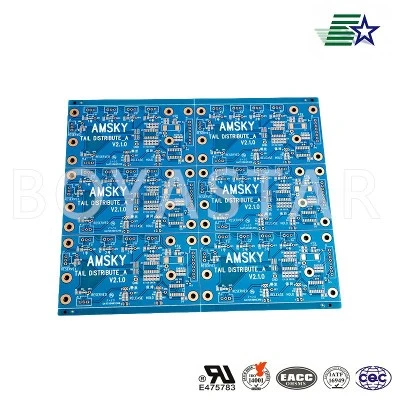
After the production files are output, they can be delivered to the manufacturer for board making, surface mount assembly, and sample testing, completing the final sample production. PCB manufacturers carry out cutting, pressing, etching, solder mask, screen printing and other processes based on production documents to produce blank lighting circuit boards. After the completion of the board, purchase corresponding components according to the BOM list, and complete component welding and plug-in processing through manual patching or small equipment. After assembly, technicians will conduct a comprehensive inspection of the sample, first checking for virtual soldering, solder leakage, and soldering issues on the appearance. Then, they will test the lighting effect, voltage regulation performance, dimming function, and load stability of the lamp by powering it on, and investigate faults such as abnormal heating, flashing lights, and failure to light up. The final finished product that meets the standards for functionality, performance, and appearance after debugging, rectification, and parameter fine-tuning is the final formed lighting PCB sample.
Send Inquiry