




What are the key aspects to consider when purchasing lighting PCB boards?
Aug 15, 2026
Leave a message
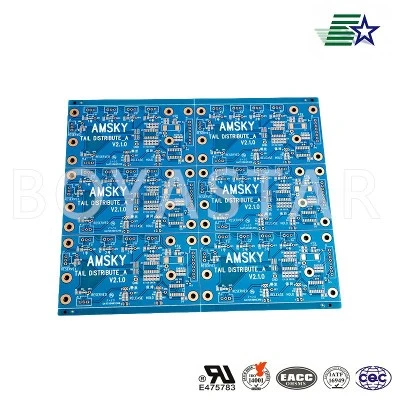
The primary focus of purchasing lighting PCB boards is to match the corresponding substrate type based on the power and usage scenario of the lamps, which directly determines the heat dissipation effect and service life of the lamps. Ordinary indoor low-power lighting fixtures, conventional FR-4 board can meet the usage needs, with high cost-effectiveness and stable performance; High brightness spotlights, mining lights, and outdoor high-power lighting equipment must prioritize the purchase of aluminum substrates, and some high-end lighting fixtures can use copper substrates. This type of metal substrate has excellent thermal conductivity and can quickly dissipate the heat generated by the operation of the lamp beads, effectively avoiding problems such as light decay, flicker, and lamp bead aging caused by high temperatures. When purchasing, it is also necessary to check the heat resistance level and dielectric properties of the substrate, eliminate inferior refurbished boards, and prevent safety hazards such as board deformation and insulation failure after long-term lighting.
The circuit technology and current carrying and heat dissipation configuration are the core technical assessment points for the procurement of lighting PCBs. The long-term operation of lighting fixtures requires high stability and heat dissipation capacity of the circuit. When purchasing, it is important to confirm the thickness and line width specifications of the copper foil to ensure that the circuit can match the rated current of the fixture, and to avoid overheating, burning, and unstable brightness due to insufficient current carrying. At the same time, attention should be paid to the process details of the board surface. The lamp bead solder pads and power areas need to be extensively covered with copper for heat dissipation treatment. The wiring should be uniform and orderly, without process defects such as fine necks, broken copper, and insufficient spacing. Priority should be given to surface technology such as tin spraying or gold deposition to ensure that the solder joints are firm and not easily oxidized, suitable for batch SMT production, reduce the rate of poor soldering and desoldering in the later stage, and ensure that the lamps are lit up for a long time without faults.
Send Inquiry